If you’re a French Bulldog parent, you’ve probably noticed that at some point your dog’s eyes look red, irritated, or bloodshot. Then suddenly you’re wondering if this is normal for the breed… or something more serious. As a practicing veterinarian, I see red eyes in French Bulldogs frequently, and this guide reflects current veterinary dermatology and ophthalmology recommendations used in clinical practice.
Red eyes are very common in French Bulldogs, but common does not always mean harmless. Because of their flat faces, wrinkly skin, and prominent eyes, Frenchies are at higher risk for irritation, inflammation, and eye injury than many other breeds.
Let’s walk through why French Bulldogs get red eyes, what’s considered normal, when to worry, and what actually helps from a veterinarian who sees this every day.
If your Frenchie’s eyes are red, it may be due to:
🚨 Red Eyes in French Bulldogs: Quick Checklist
While waiting for a vet appointment, you can:
✔ Gently wipe discharge with sterile saline or a clean damp cloth with no pressure on the eye itself
✔ Reduce exposure to wind, dust, smoke, or strong scents
✔ Prevent rubbing or pawing at the eye (use a cone if needed)
✔ Monitor closely for changes over the next 24 hours
Do NOT:
✖ Use human eye drops or leftover medications
✖ Use peroxide, alcohol, or essential oils near the eyes
✖ Ignore squinting, pain, or cloudiness
Call your vet urgently if you notice:
🚩 Squinting or holding the eye closed
🚩 Thick yellow or green discharge
🚩 Cloudy or bluish eye surface
🚩 One eye suddenly worse than the other
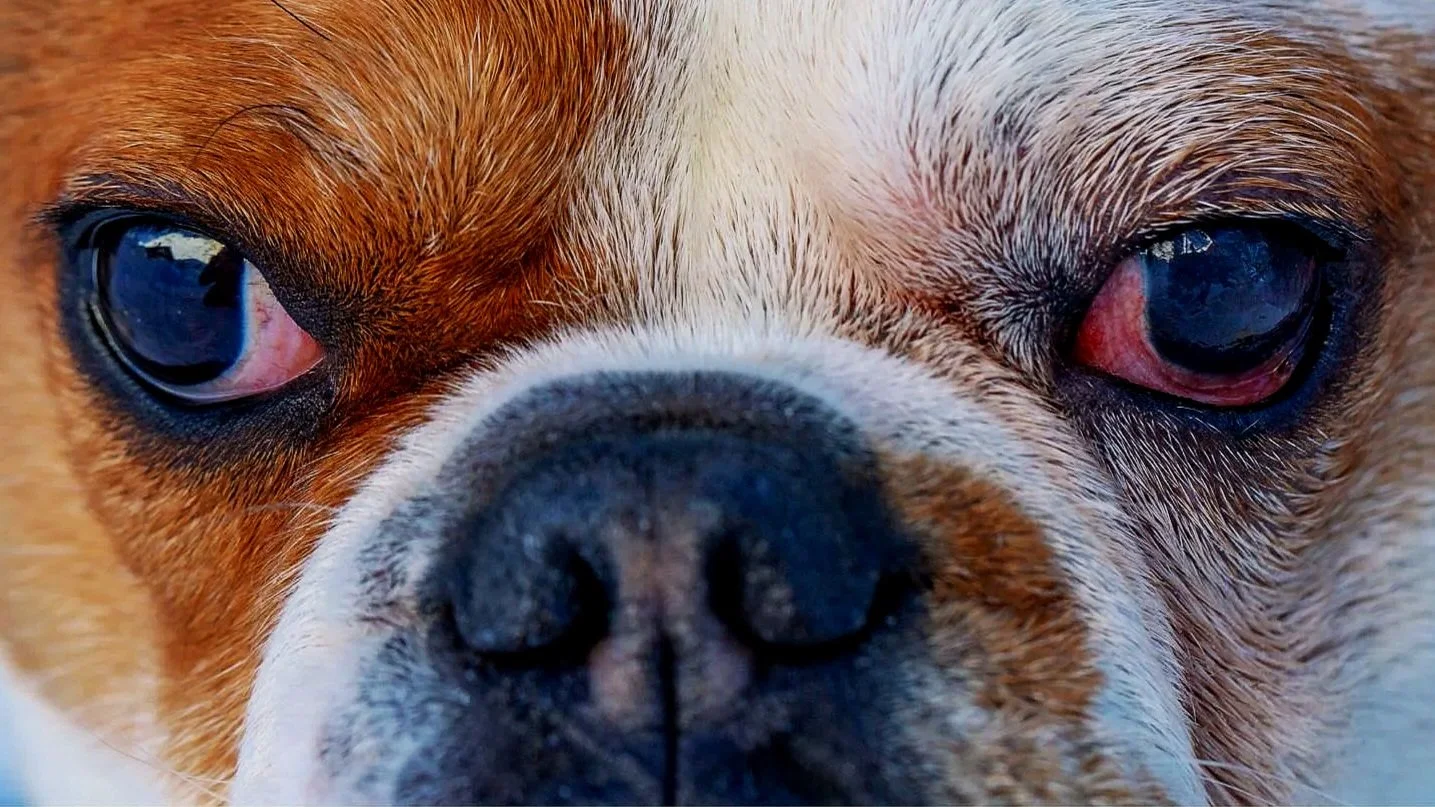
Why French Bulldogs Are Prone to Red Eyes
French Bulldogs are a brachycephalic (flat-faced) breed, meaning their skull shape affects how their eyes sit in the eye socket and how well they’re protected.
Because of this anatomy, French bulldog’s eyes often have:
More exposed corneas (the front of the eye)
Incomplete or inefficient dog blinking
Increased tear evaporation due to more exposed corneas
Less protection from debris, foreign material, and trauma
More visible blood vessels on the eye surface
This doesn’t mean red eyes are “normal” but it does explain why French bulldog eye problems are among the most common health issues seen in this incredibly popular and sweet breed.
Red Eyes Are a Symptom! Not a Diagnosis
One of the most important things to understand is that red eyes are a clinical sign, not a medical condition on their own. In clinical practice, I see Frenchies commonly develop red eyes secondary to allergies, corneal irritation, eyelid conformation, or tear film disorders.
When veterinarians evaluate dog’s red eyes, we’re trying to identify the underlying cause, which may include:
Inflammation
Infection
Tear film problems
Foreign objects
Injury to the cornea
Allergic reactions
Structural issues related to breed anatomy
Different eye conditions can look very similar early on, which is why guessing at home often delays appropriate medical treatment.
Common Causes of Red Eyes in French Bulldogs
1. Cherry Eye (Third Eyelid Gland Prolapse)
Cherry eye is one of the most common eye conditions seen in French Bulldogs and one of the top reasons owners search for “red eye” in this breed.
Cherry eye appears as a pink or red round bulge in the inner corner of the eye. This is not a tumor or growth. It is the tear gland of the third eyelid that has slipped out of its normal position.
French Bulldogs are predisposed because:
Their shallow eye sockets provide less structural support
Their connective tissue is often weaker
Their facial anatomy allows the gland to prolapse more easily
That third eyelid gland is important. It produces approximately 30–40% of your dog’s tear film. When it becomes exposed and inflamed, redness increases and tear production can become unstable.
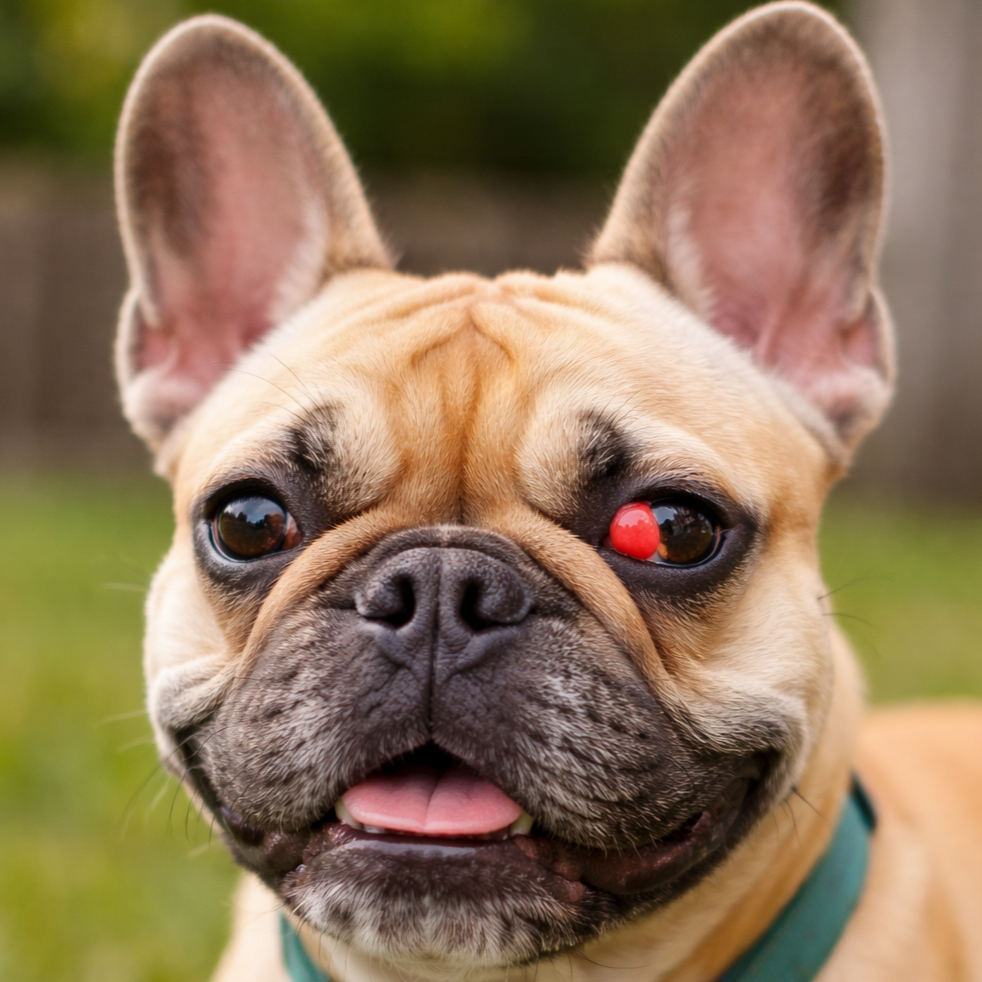
Is Cherry Eye Painful?
Early on, it may look dramatic but not be severely painful. However:
The exposed gland can become irritated
Rubbing can lead to corneal ulcers
Chronic inflammation increases the risk of dry eye long term
Does Cherry Eye Go Away on Its Own?
True resolution is uncommon. Temporary improvement may occur with anti-inflammatory drops, but most cases eventually require surgical correction to reposition the gland.
Why Removal Is Not Recommended
Years ago, the gland was often removed. We now know this significantly increases the risk of permanent dry eye. Modern surgical techniques preserve and replace the gland rather than remove it, protecting long-term tear production.
2. Allergies & Environmental Irritants
Many French Bulldogs have underlying skin allergies, and the eyes are frequently affected as well.
Allergy-related red eyes often appear as:
Bilateral redness
Watery eyes
Mild swelling
Seasonal or environmental flare-ups
If your Frenchie also struggles with paw licking, itchy skin, or ear infections, the eye redness may be part of the same allergic pattern.
Tracking when symptoms flare, such as weather changes, pollen seasons, new environments, can help uncover patterns over time. I created a free itch and allergy tracker to help pet owners document these details in one place:
👉 Learn more about our free itch and allergy tracker
Want More? 📱 Join the HotSpotter app waitlist if you want digital tracking, photo logs, and trend insights designed specifically for itchy pets
3. Corneal Ulcers (A True Emergency)
Corneal ulcers are scratches or wounds on the front of the eye and are especially common in flat-faced breeds like French Bulldogs.
Important things to know:
Redness may be subtle early but pain can escalate quickly
Even a small scratch can worsen rapidly
Severe cases can lead to vision loss if untreated
Clinical signs include:
Squinting or holding the eye closed
Excessive tearing
Pawing at the face
Sudden behavior changes
If you suspect a corneal ulcer, do not wait! This requires urgent veterinary care.
4. Dry Eye (Keratoconjunctivitis Sicca)
In French Bulldogs, dry eye may:
Be mild but chronic
Cause redness without obvious discharge
Worsen with environmental factors like dry air or wind
Flare during allergy season
Clinical signs may include:
Red or bloodshot eyes
Thick or sticky eye discharge
Squinting or rubbing/pawing at the eyes
Dull or dry-appearing eyes
Because watery eyes don’t always mean adequate tear production, veterinarians often perform a Schirmer tear test. This is a necessary screening tool that objectively measures whether your dog has enough tears.
Ironically, eyes that seem to be “running more” can actually be a sign of dry eye, especially when eye boogers are the predominant symptom. Tears are made up of water, lipid, and mucus. When there’s less water, the mucus component becomes more noticeable.
Dry eye is often underdiagnosed in French Bulldogs and can become a lifelong health condition if left untreated. I have seen dogs lose vision due to corneal damage from long-term, unmanaged dry eye.
5. Eye Infections (Usually Secondary)
True primary eye infections are less common than many pet owners expect.
Most eye infections develop secondary to:
Dry eye
Allergies
Chronic irritation
Trauma or foreign material
Signs suggesting infection include:
Thick yellow or green eye discharge
Worsening redness
Swelling
Odor
Topical medications like antibiotic eye drops should only be used after veterinary evaluation as using the wrong drops can worsen certain eye conditions.
6. Chemical or Mechanical Irritation
French Bulldogs are particularly sensitive to:
Grooming products
Facial wipes
Shampoos
Household cleaners
Because their eyes sit more forward in the eye socket, even products labeled “gentle” can cause chemical burns or irritation if they contact the eye surface. Even contact irritation around the face or neck from collars can sometimes worsen inflammation in sensitive dogs.
Mild vs Severe Cases: When to Worry
Often Mild & Monitorable
Mild redness after wind exposure
Slight watering after outdoor activity
Redness that improves within 24 hours
When Red Eyes in a French Bulldog Are an Emergency
Sudden squinting or eye closed
Cloudiness or blue appearance
Pawing or rubbing at the eye
Thick green/yellow discharge
Eye looks swollen or protruding
Sudden behavior change or pain
The table below summarizes the most common causes of red eyes in French Bulldogs and how urgently they should be evaluated.
| Condition | Common Signs | One Eye or Both? | Urgency |
|---|---|---|---|
| Allergies | Redness, tearing, itching, paw licking, ear issues | Usually both eyes | Low–Moderate |
| Cherry Eye | Pink/red bulge in inner corner of eye | Often one eye initially | Moderate (non-emergency but needs vet care) |
| Eye Infection (Conjunctivitis) | Redness, discharge, squinting, swelling | One or both | Moderate |
| Dry Eye (KCS) | Thick mucus discharge, dull eye surface | Often both eyes | Moderate–Urgent |
| Corneal Ulcer | Squinting, pain, tearing, cloudy eye | Usually one eye | Emergency |
| Eye Injury / Scratch | Sudden redness, swelling, pawing at eye | One eye | Emergency |
| Foreign Material (dust, hair, grass) | Sudden irritation, blinking, tearing | Usually one eye | Urgent if persistent |
| Glaucoma | Red eye, enlarged eye, pain, vision loss | Usually one eye initially | Emergency |
How Veterinarians Diagnose Red Eyes
A thorough eye exam may include:
Fluorescein stain to assess the cornea (checking for corneal ulcers)
Schirmer tear test for tear production (checking for dry eye)
Evaluation of eyelids and nictitating membrane
Assessment of blood vessels and inflammation
Ruling out foreign objects or injury
This screening determines whether topical medications, anti-inflammatory drops, oral medications, or referral are needed.
What Actually Helps French Bulldog Red Eyes
✔ Veterinary Diagnosis First
Eye conditions can look identical but require very different treatment options.
✔ Support the Tear Film
Many French Bulldogs benefit from:
Preservative-free artificial tears
Vet-recommended lubricating gels
Avoid human eye drops unless explicitly directed by your veterinarian.
✔ Address Underlying Allergies
Managing skin allergies and environmental triggers can dramatically improve eye comfort.
If you’re preparing for a dermatology or allergy visit, this guide may help:
How to Prepare for a Skin or Allergy Veterinary Appointment
What Can I Safely Do While Waiting for a Vet Appointment?
If your French Bulldog has mild red eyes and is otherwise acting comfortable, there are a few safe steps you can take while waiting for veterinary evaluation. These steps do not replace medical care, but they can help reduce irritation and prevent things from getting worse.
✔ Keep the Eyes Clean (Gently)
If there is discharge or debris around the eyes:
Use a clean, damp cloth or sterile saline
Use plain sterile saline only
No contact lens solution with additives
No medicated eyewash unless directed by a veterinarian
Gently wipe away from the eye
Use a fresh section of cloth for each eye
Avoid scrubbing or applying pressure to the eye itself.
✔ Reduce Environmental Irritants
Because French bulldog’s eyes are more exposed, minimizing irritants can help:
Avoid smoke, dust, strong fragrances, or cleaning sprays
Skip facial wipes or grooming products near the eyes
Limit windy outdoor exposure if redness flares afterward
Small environmental changes can make a noticeable difference in mild cases.
✔ Use ONLY Vet-Approved Lubrication (If Recommended)
If your veterinarian has previously recommended preservative-free artificial tears, these may be used short-term to support the tear film only if:
There is no squinting or pain
There is no thick yellow or green discharge
There is no cloudiness or color change
If you’re unsure, it’s always safer to wait and ask your vet first.
✔ Prevent Rubbing or Pawing
Rubbing can turn mild irritation into a corneal ulcer very quickly.
Use a cone or soft recovery collar if needed
Keep nails trimmed
Monitor closely for squinting or increased blinking
✔ Cool Compress for Mild Swelling
If the eye looks mildly swollen but your dog is not squinting or painful, a cool compress can help reduce inflammation.
Use a clean cloth soaked in cool (not ice-cold) water
Gently hold against the closed eyelid for 1–2 minutes
Do not apply pressure
Do not place ice directly on the eye
Stop immediately if your dog resists or shows discomfort.
✔ Preservative-Free Artificial Tears (If Previously Recommended)
These may help if:
There is no squinting
No thick yellow/green discharge
No cloudiness
No visible ulcer suspected
Use preservative-free only, and avoid products labeled “redness relief.”
If your dog has never been evaluated for tear production, it is safest to wait for veterinary guidance.
❌ What NOT to Try While Waiting
This is just as important as what to do.
While waiting for a vet appointment, do not:
Use human eye drops
Use peroxide, alcohol, or essential oils
Use leftover prescription eye medications
Assume redness will “just go away”
Delay care if pain, squinting, or vision changes appear
Using the wrong product can make certain eye conditions significantly worse.
When in doubt, it’s always okay to call your veterinarian — even if the appointment is still days away.
A Note for French Bulldog Owners
French bulldog owners are not doing anything wrong because these eye issues are largely related to anatomy and genetics. Responsible breeders play an important role by prioritizing health and eye structure, but ongoing monitoring remains essential.
The earlier eye problems are recognized, the easier they are to manage.
FAQs about Red Eyes in Frenchies
-
Sudden redness in a French Bulldog’s eyes is most commonly caused by allergies, irritation from debris or hair, dry eye, infection, or minor injury. Because Frenchies have prominent eyes and shallow eye sockets, even mild environmental triggers like pollen, dust, or grass exposure can quickly cause inflammation. If redness appears suddenly or worsens within 24 hours, causes pain, squinting, or pawing at the eye: a veterinary exam is recommended to rule out corneal injury or ulceration.
-
Not always, but they can become urgent quickly. Mild redness without pain or squinting is often related to allergies or irritation. However, red eyes accompanied by squinting, cloudiness, swelling, discharge, or rubbing should be treated as urgent because French Bulldogs are prone to corneal ulcers, which can worsen rapidly.
-
Yes. Allergies are one of the most common causes of chronic or recurrent red eyes in French Bulldogs. Environmental allergens trigger inflammation affecting the skin, ears, paws, and eyes simultaneously. Dogs with allergy-related eye redness often also show signs like paw licking, ear infections, or facial rubbing. Allergies typically cause bilateral symptoms.
-
French Bulldogs are predisposed to eye issues due to their facial structure. Their large, prominent eyes, shallow eye sockets, and eyelid conformation increase exposure to irritants and reduce natural tear protection. This anatomy makes them more susceptible to dry eye, allergies, injuries, and corneal ulcers compared to many other breeds.
-
Mild irritation may improve with gentle eye flushing using veterinarian approved sterile saline and limiting environmental exposure. However, human eye drops or leftover medications should never be used without veterinary guidance. Because serious eye conditions can look similar to minor irritation early on, persistent redness should always be evaluated by a veterinarian.
-
Seek emergency veterinary care if your French Bulldog shows:
Squinting or keeping the eye closed
Sudden cloudiness or blue appearance
Thick green or yellow discharge
Swelling or bulging of the eye
Pawing or rubbing at the eye
Signs of pain or lethargy
Eye injuries and ulcers can progress rapidly and early treatment greatly improves outcomes.
The Bottom Line
Red eyes in French Bulldogs are common, but they should never be ignored. Their unique anatomy places them at higher risk for chronic irritation, dry eye, ulcers, inflammation, and infection.
The good news? With early recognition, proper screening, and targeted medical treatment, most French Bulldogs do very well and stay comfortable long-term.
If your dog’s eye issues seem to flare at certain times, tracking patterns in the environment, season, activities, and symptoms can make veterinary visits clearer and treatment more effective. 📱 Join the HotSpotter app waitlist if you want digital tracking, photo logs, and trend insights designed specifically for itchy pets
Your Frenchie’s eyes deserve the same thoughtful care as the rest of them 🤍

💛 Dr. Fran, DVM, CPEV
— veterinarian and founder of Kind Vet Wellness.
Learn more about Dr. Fran → Click Here
Medical Disclaimer:
The content on this website is intended for educational purposes only and does not replace professional veterinary medical advice, diagnosis, or treatment. Always consult your veterinarian regarding your pet’s individual health concerns.