
Your dog’s collar rests against their skin 24/7. Unlike harnesses that are removed after walks, a regular collar remains in constant contact — which means material, construction, and fit matter more than most dog owners realize.
What You’ll Learn in This Guide
Best collar materials for sensitive dogs
How to choose the right type of dog collar
Signs of irritation to watch for
Collars to Avoid for Sensitive-Skinned Dogs
Introduction: Why Choosing the Right Collar Matters
Dogs with sensitive skin are prone to allergic reactions, contact dermatitis, friction sores, and hot spots. Collars made from harsh chemicals, synthetic materials, rough edges, or low-quality dyes can trap moisture and bacteria. If you’re not sure whether your dog’s irritation is truly collar-related, tracking patterns over time can be incredibly helpful. We created a simple dog itch tracker app to help pet parents identify trends, flare triggers, and early signs of discomfort before skin issues escalate.
The best collars for dogs with sensitive skin prioritize:
Hypoallergenic materials
Breathable construction
Smooth edges
Stainless steel hardware
A comfortable fit
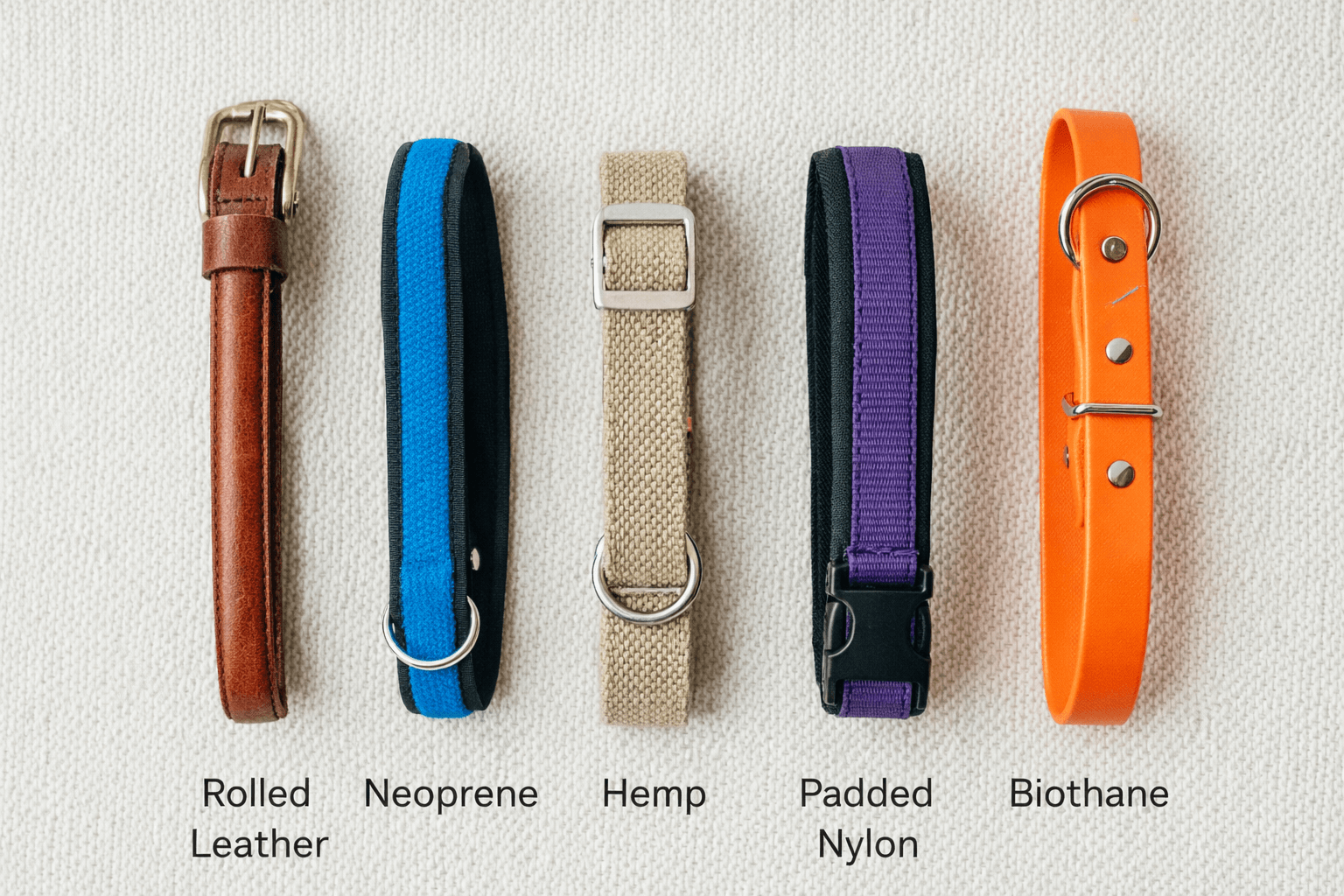
Common irritants include nickel-plated buckles, poorly tanned leather, synthetic options treated with chemical finishes, and stiff traditional collars that rub repeatedly in the same location.
1. Rolled Leather Dog Collar
Rolled leather dog collars are often considered the gold standard for sensitive-skinned dogs.
Unlike flat traditional collars, rolled leather features a cylindrical shape that distributes pressure evenly around the neck. This design prevents sharp folding and eliminates rough edges that can cause friction and hair thinning.
Why leather works so well
High-quality leather dog collars:
Soften over time
Mold to the dog’s neck
Improve comfort with wear
Allow airflow
Premium leather is naturally hypoallergenic when properly processed. Vegetable-tanned leather (not chemically treated) is especially beneficial for dogs with skin sensitivities.
Rolled leather collars are also ideal for:
Long-coated dog breeds prone to hair breakage
Dogs experiencing hair loss from friction
Strong pullers who need better pressure distribution
Look for:
Stainless steel hardware
Smooth stitching
No exposed interior seams
Adjustable sizing for a perfect fit
Maintenance for leather collars:
Wipe weekly
Condition periodically
Dry fully
A properly fitted leather collar becomes one of the most comfortable collars your dog will ever wear.
2. Neoprene Padded Dog Collar
Neoprene padded collars are an excellent choice for active dogs with sensitive skin.
Neoprene is a closed-cell synthetic rubber. It is waterproof, soft, and resistant to bacteria growth. Unlike porous materials, it does not trap moisture which is critical for preventing skin irritation collars are often blamed for.
Benefits of neoprene collars
Lightweight
Quick-drying
Even pressure distribution
Soft backing against dog’s skin
Ideal for active dogs and water lovers
For dogs that swim frequently or live in humid climates, moisture management is essential. Wet collars that sit against the skin can worsen allergic reactions.
However, neoprene may feel warmer than breathable materials like hemp or cotton. For thick-coated dog breeds in hot weather, ventilation becomes more important.
Neoprene works best when paired with:
Stainless steel hardware
Wide collar design for strong pullers
Smooth interior lining
For many dog owners, neoprene provides a good collar balance between durability and comfort.
3. Hemp Dog Collar
Hemp dog collars are a great choice for environmentally conscious owners and sensitive-skinned dogs.
Hemp is naturally:
Antimicrobial
Hypoallergenic
Breathable
Durable
Unlike many synthetic materials, hemp does not rely on harsh chemicals in production. It softens with washing while maintaining structural integrity.
For dogs prone to chemical sensitivities, hemp is often a best option because it contains minimal processing residues.
Why hemp works
Hemp fibers wick away moisture, preventing the warm, damp environment that allows bacteria and yeast to thrive. For dogs with recurring neck irritation, this breathability makes a meaningful difference.
Hemp collars are particularly beneficial for:
Dogs with allergic reactions to nylon
Dogs living in warm climates
Owners wanting a natural fiber alternative
Maintenance is important. Hemp absorbs moisture more than silicone collars or Biothane. Regular cleaning ensures the collar remains a great choice for long-term comfort.
4. Silk Dog Collar
Silk dog collars are among the most gentle options available.
Silk is a natural protein fiber that creates an exceptionally smooth surface. For sensitive-skinned dogs with severe irritation or contact dermatitis, minimizing friction is critical.
When silk makes sense
Indoor dogs
Small dog breeds
Dogs recovering from skin infections
Dogs with extremely reactive skin
Silk offers:
Temperature regulation
Lightweight feel
Reduced micro-abrasions
Minimal mechanical stress
However, silk is not ideal for strong pullers or active dogs. It lacks durability compared to leather collars or padded nylon collars.
Silk is a niche but valuable option when comfort outweighs durability needs.
5. Padded Nylon Dog Collar
Padded nylon collars combine structure with softness.
Standard nylon can irritate dogs with skin sensitivities. However, soft nylon collars with fleece or neoprene padding provide a protective barrier between the collar and dog’s skin.
Why padded nylon works
Breathable materials
Adjustable sizing
Machine washable
Durable construction
Affordable compared to leather dog collars
Modern padded collars often use memory foam or fleece lining to create a comfortable fit. When well-constructed, they eliminate pressure points and reduce friction.
Look for:
Smooth seams
Wide collar design for strong pullers
Stainless steel hardware
No exposed rough stitching
Maintenance for Nylon Collars:
Machine wash
Air dry completely
For many active dogs, padded nylon offers one of the most practical and comfortable collar solutions.
6. Silicone and Biothane Collars
Silicone collars and Biothane represent advanced synthetic options designed to reduce irritation.
Biothane is coated webbing that is:
Waterproof
Easy to clean
Non-porous
Resistant to bacteria
Medical-grade silicone collars are extremely smooth and free from harsh chemicals when manufactured properly.
These are especially helpful for:
Dogs with recurring moisture-related irritation
Dogs who swim daily
Owners needing frequent sanitation
Unlike traditional collars, silicone and Biothane do not absorb sweat or debris.
However, as with any synthetic options, ensure there are no chemical coatings or dyes that may trigger allergic reactions.
Maintenance for Silicone Collars:
Rinse and disinfect regularly
7. Cotton Dog Collars
Cotton dog collars are a soft, breathable option for dogs with sensitive skin.
Cotton is a natural fiber that feels lightweight against the skin and is less abrasive than many stiff synthetic collars. For dogs who develop mild rubbing, hair thinning, or irritation from rough collar edges, cotton can be a comfortable everyday choice.
Why cotton collars work
Cotton collars are:
Soft
Breathable
Lightweight
Usually easy to wash
Gentle against short or sensitive coats
Organic cotton dog collars may be especially appealing for owners wanting to avoid certain synthetic materials, harsh dyes, or chemical treatments.
Cotton collars are particularly beneficial for: mild friction-related irritation, dogs with short coats who need a lightweight indoor or everyday collar, and owners looking for a natural fiber alternative.
However, cotton does absorb moisture more than waterproof materials like silicone or Biothane. For dogs who swim frequently, drool heavily, live in humid climates, or develop odor and redness under the collar, cotton may hold too much moisture against the skin.
Summary: Best Collar Materials for Dogs With Sensitive Skin
Material selection remains the most important factor when choosing the best collars for dogs with sensitive skin.
The most reliable options include:
Rolled leather
Hemp
Padded nylon
Neoprene
Silicone collars
Cotton dog collars
These hypoallergenic materials reduce friction and moisture buildup when combined with smooth construction and a proper fit.
Avoid collars with rough edges, nickel hardware, cheap synthetic materials, stiff regular collars, or harsh chemical treatments. Poor-quality synthetic collars often worsen irritation rather than prevent it.
If irritation persists despite switching collar material, broader dermatologic issues may be involved. Preparing for a skin allergy veterinary appointment — including tracking symptoms — helps identify whether the collar or an underlying allergy is the true trigger.
Choosing the Right Type of Dog Collar
Not every type of dog collar is appropriate for sensitive dogs, even if labeled hypoallergenic dog collars. Design matters as much as material.
Traditional collars made from stiff synthetic fibers may rub along sensitive areas. Narrow collars can create pressure points on long necks, while decorative stitching or bulky hardware may irritate the shape of your dog’s neck.
When selecting the right collar material, consider:
The shape of your dog
Coat length
Activity level
Whether your dog is a strong puller
A wide collar with soft padding is often a good choice for dogs with long necks, such as Greyhounds or Whippets, because it distributes pressure more evenly. For very sensitive dogs, natural fibers like hemp or organic cotton may be safer alternatives than heavily treated synthetic options.
For ongoing skin sensitivities, collar adjustments alone are rarely enough. Supporting the skin barrier and managing environmental triggers are equally important. My 28-Day Skin & Itch Reset outlines practical daily steps that reduce flare-ups and improve overall skin health.
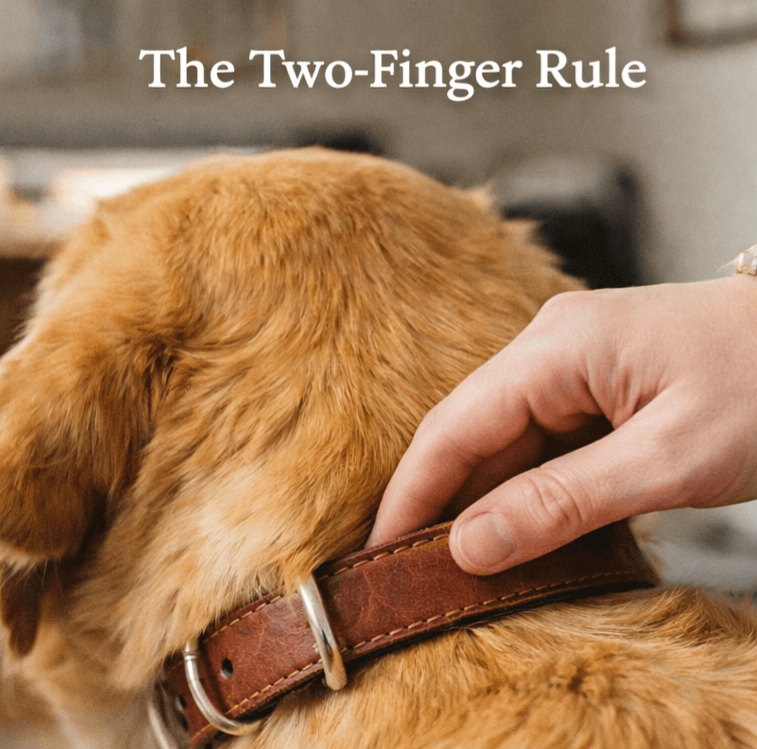
TWO fingers should slide comfortably under the collar
Fit Matters More Than Material
Even the best dog collars can cause irritation if poorly fitted.
A comfortable fit should:
Allow two fingers under the collar
Prevent slipping over the head
Avoid hardware resting directly on the throat
Sit flat without twisting
Wider collars distribute pressure more evenly for strong pullers, while thin collars concentrate force in one area. Reassess fit after grooming, seasonal coat changes, or weight fluctuations.
How to Measure for Proper Collar Fit
Proper fit prevents pressure sores, friction, and unnecessary irritation.
Follow these steps:
1️⃣ Measure Your Dog’s Neck
Use a soft measuring tape and measure around the middle of the neck where the collar normally sits.
If you don’t have a soft tape, use string and measure it against a ruler.
2️⃣ Add Allowance for Coat and Comfort
Add approximately:
1 inch for short-coated dogs
1–2 inches for thick or long-coated breeds
The collar should never feel snug or tight.
3️⃣ Apply the Two-Finger Rule
Once fitted, you should be able to slide two fingers comfortably between the collar and your dog’s neck.
If you cannot fit two fingers, the collar is too tight
If it slides easily over the head, it is too loose
4️⃣ Check After Grooming
After haircuts or seasonal coat changes, reassess the fit. A collar that fit properly last month may now be too loose or too tight.
5️⃣ Reassess Monthly
Weight changes, muscle development, and coat density can alter fit over time. A quick monthly check prevents long-term irritation.
How Your Dog’s Shape Affects Comfort
Your dog’s anatomy influences collar comfort.
Dogs with long necks often benefit from wider collars.
Thick-coated breeds need breathable materials to prevent moisture buildup, while short-coated dogs are more prone to visible signs of irritation.
When checking your pup’s collar, ensure it lies flat, has no pressure ridges, and isn’t rubbing near the shoulders or under the jaw.
Signs of Collar-Related Irritation
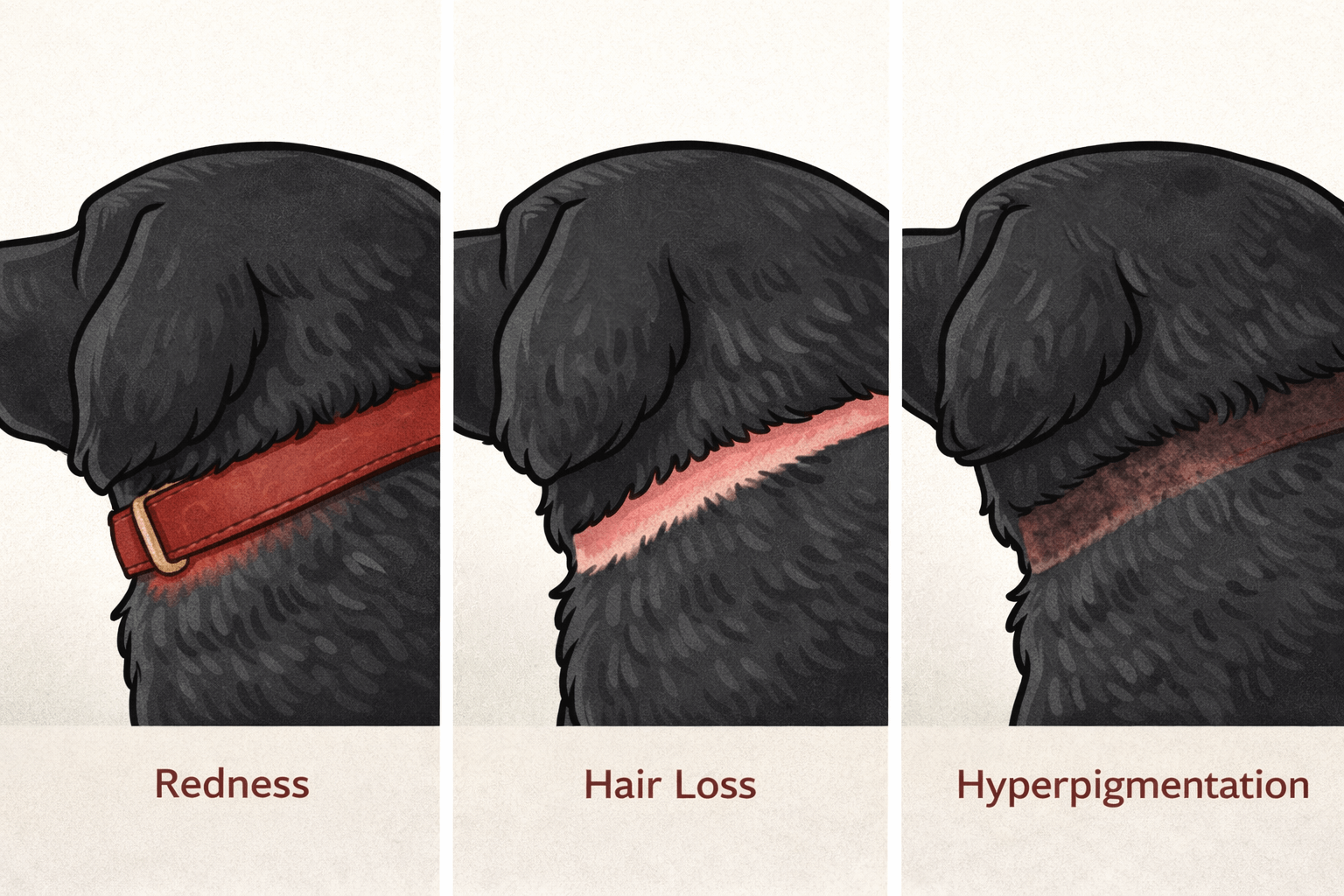
Monitor your dog for:
Redness under collar
Scratching at neck
Hair thinning
Flaking skin
Odor buildup
Behavioral changes
If irritation extends beyond the collar line, underlying allergies may be present.
Collar changes reduce mechanical irritation but do not treat systemic allergy.
Consult your veterinarian if signs persist.
You may already be familiar with signs like ear scratching or paw licking — behaviors that often accompany underlying allergies. For more insight into these patterns, see what chronic itching tells you about your dog’s overall skin sensitivity.
Is It an Allergy or Just Friction?
Not all neck irritation is truly caused by the collar itself. Understanding the pattern of irritation helps determine whether you’re dealing with contact irritation, mechanical friction, moisture buildup, or a broader allergy.
Vet-created tracking tip: If your dog’s irritation keeps coming back, spreads beyond the collar line, or shows up with paw licking, ear infections, belly redness, or seasonal flare-ups, start tracking the pattern. HotSpotter helps you log symptoms, photos, treatments, and possible triggers in one place so your vet has a clearer timeline to work from.
Contact Dermatitis (Material Sensitivity)
Contact dermatitis typically appears:
Directly under the collar line
As redness, small bumps, or scaling
Symmetrical around the neck
This type of irritation is often triggered by:
Nickel-plated hardware
Synthetic dyes
Chemical finishes
Low-quality synthetic fibers
When the collar is removed, the skin may gradually improve over several days.
Friction Alopecia (Mechanical Hair Loss)
Friction alopecia is caused by repeated rubbing in the same location.
Signs include:
Hair thinning in a ring pattern
Smooth, shiny skin under the collar
Minimal redness initially
This is common in short-coated dogs and strong pullers. It’s a mechanical issue rather than an allergic one.
Moisture-Associated Dermatitis
Moisture trapped beneath the collar creates a warm environment where bacteria and yeast can thrive.
This is more common in:
Humid climates
Thick-coated breeds
Dogs who swim frequently
Dogs wearing collars 24/7 without removal
You may notice:
Damp skin
Odor
Darkened or thickened skin
Recurrent irritation in the same area
Systemic Allergies (Not Just the Collar)
If irritation extends beyond the neck such as:
Belly redness
Generalized itching
The collar is unlikely to be the sole cause.
Collars cause localized irritation.
Allergies cause widespread inflammation.
If the pattern doesn’t stop at the collar line, broader dermatologic evaluation may be necessary.
Industry Insights:
Most buying guides focus only on material — but hardware and construction matter equally.
Stainless Steel Hardware
Stainless steel reduces allergic reactions compared to nickel-plated metals. For sensitive-skinned dogs, this small detail can make a significant difference.
Weight Distribution
Heavier collars create more mechanical stress. Lightweight options often outperform bulky padded designs.
Edge Finishing
Smooth edges prevent micro-trauma. Rough edges increase friction.
Break-In Period
Even leather collars require gradual introduction. Wear for short intervals initially.
A good collar is one that balances material, construction, and fit.
Collars to Avoid for Sensitive-Skinned Dogs
Some types of collars are rarely appropriate for dogs with skin sensitivities.
Herm Sprenger Pinch Collars
While tools like Herm Sprenger pinch collars are sometimes used for training, they are not designed for long-term wear on sensitive-skinned dogs. The prongs create pressure points that can worsen signs of irritation and increase mechanical stress on the dog’s skin.
These collars are training tools — not everyday collars.
Cheap Synthetic Collars
Low-cost synthetic fibers often contain:
Harsh chemicals
Inconsistent dye processing
Rough interior seams
Synthetic collars made with inferior materials can trap heat and moisture, worsening allergic reactions.
Heavy Hardware
Solid brass hardware and decorative buckles may look attractive, but they increase weight. In some dogs, this extra weight contributes to friction and hair loss along sensitive areas of the neck.
For sensitive dogs, lightweight stainless steel hardware is typically a safer alternative.
Maintenance: The Overlooked Factor
Collars accumulate:
Dead skin cells
Dirt
Yeast
Bacteria
Regular cleaning prevents skin irritation collars often cause when neglected. Proper maintenance preserves hypoallergenic materials and extends lifespan.
Persistent licking can signal more widespread sensitivity than just a friction problem. If paw licking or body-focused itching happens alongside collar irritation, it’s worth investigating what’s triggering both.
Frequently Asked Questions
-
Genuine leather, hemp, padded nylon, neoprene, and medical-grade silicone are typically the best option.
-
Soft nylon collars with padding and smooth construction can be a great choice when properly maintained.
-
Yes. Wide collars distribute pressure more evenly and reduce concentrated stress.
-
Yes. Poor fit or rough edges can create friction leading to hair thinning.
-
Sometimes, yes. A harness can be a better option if your dog has irritation, hair loss, scabbing, or redness right where the collar sits. Moving pressure away from the neck may give the skin time to heal and can reduce friction in dogs who pull on leash.
However, harnesses can also cause skin irritation if they rub behind the front legs, trap moisture, fit too tightly, or stay on for long periods. For dogs with sensitive skin, I usually prefer using a well-fitted harness for walks and removing it afterward, while keeping the collar lightweight and loose enough for ID tags when needed.
-
Rolled leather dog collars distribute weight evenly and have a smooth surface, reducing friction and preventing skin irritation for sensitive dogs.
-
Hemp dog collars are hypoallergenic, antimicrobial, and wick away moisture, making them great for preventing skin irritation and are eco-friendly.
As a veterinarian, I can tell you this:
Most chronic skin issues aren’t random.
They’re patterns we just haven’t tracked yet.
If you’re navigating sensitive skin or recurring irritation, start by downloading my free Itch Tracker — it’s the same framework I wish more clients used before appointments.
And if you’d like a smarter way to monitor flare-ups over time, download the HotSpotter app — a tool designed to bring clarity to itchy pets.
You belong in this little corner of calm, healthy skin.
Updated May 2026 | Written by Dr. Fran Bergkoetter, DVM, practicing small animal veterinarian and founder of The Kind Vet