
If your dog is itching their ears and licking their paws, it’s rarely just quirky behavior. It’s actually a common sign that something is irritating their skin, ears, or immune system that I see every day at my clinic.
As a veterinarian, this is one of the most common and most telling patterns I see in dogs with skin disease. When ear scratching and paw licking show up together, it usually points to a shared underlying cause, not two unrelated problems.
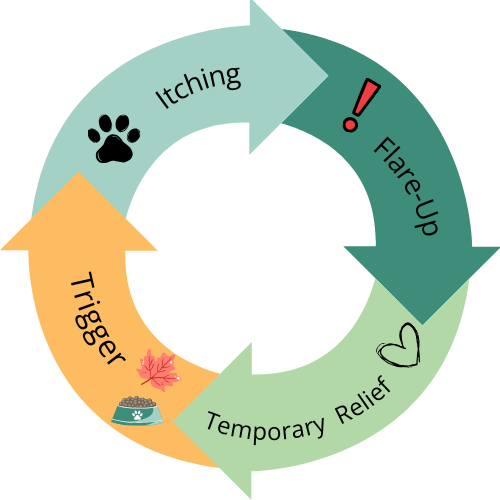
The good news? Once we stop guessing and start looking for patterns, most dogs can get real relief and many families can avoid the “flare → treat → flare again” cycle.
In this guide, you’ll learn:
Ready to get clarity instead of guessing?
👉 Join the 28-Day Skin & Itch Reset — daily steps, goals, and gentle education.
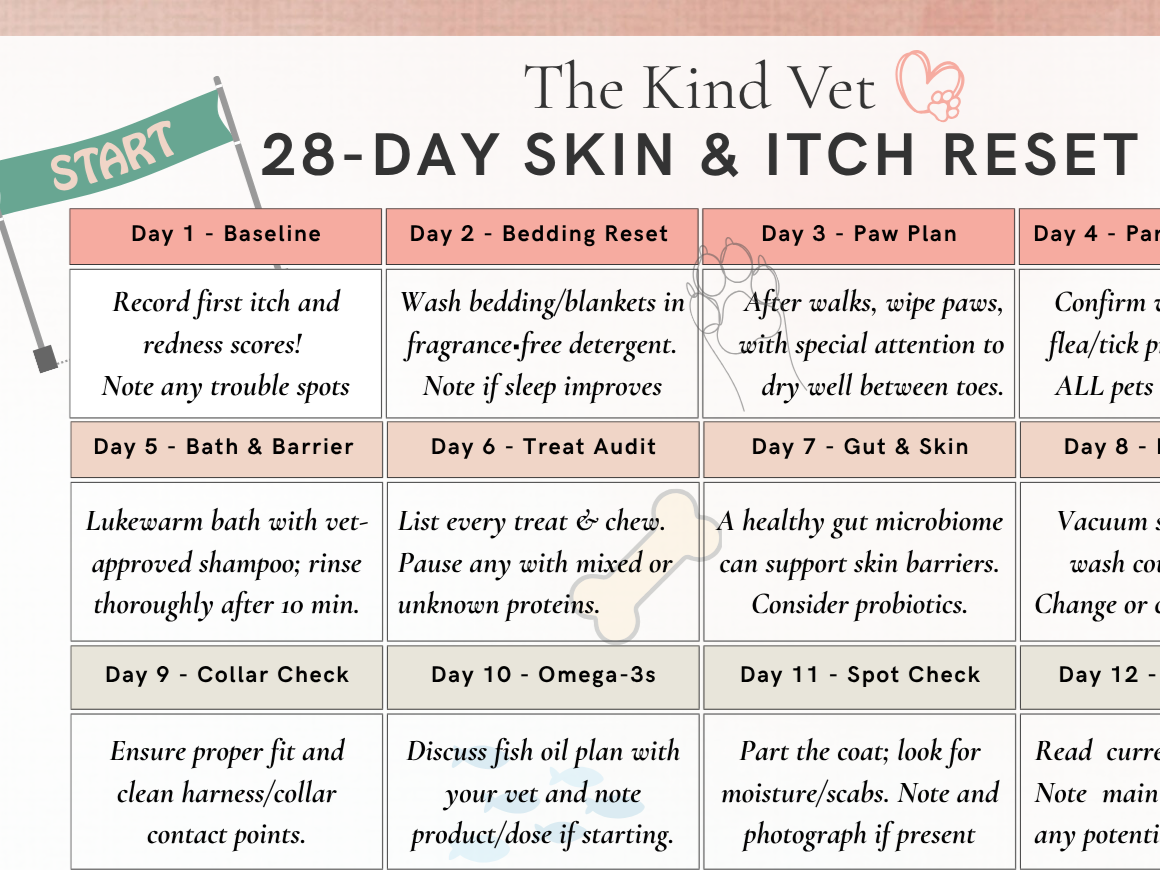
Preview of the Skin & Itch Reset and what you will learn!
Why Do Dogs Itch Their Ears and Lick Their Paws at the Same Time?
When pet parents tell me their dog is constantly scratching their ears and excessively licking their paws, we’re often seeing a systemic pattern. This means the trigger is affecting multiple parts of the body.
Why Ears and Paws are so vulnerable
Ears and paws are “high-exposure zones”:
High-contact with allergens, moisture, and bacteria (ground + grass + dust + pollen)
Warm and humid environments (especially in the ear canal and between toes)
Thinner skin + small folds that trap debris
Dogs can spread irritation from paws to the ears through scratching
Because of this, inflammation in one area often shows up in the other — and it can become self-perpetuating:
Paw licking damages the skin → skin barrier breaks → secondary infections develop
Ear scratching worsens inflammation → chronic ear infections become more likely
Infection increases itch → more licking and scratching → more inflammation
If you’ve felt like you’re stuck in a loop, you’re not imagining it. This loop is real.
Most Common Reasons Dogs Scratch Ears and Lick Paws
Most dogs don’t have just one cause. It’s often a variety of causes interacting together.
1) Environmental Allergies (Allergic Skin Disease / Atopic Dermatitis)
This is one of the most common reasons dogs itch.
Common environmental allergens include:
Pollen
Dust mites
Mold spores
Grasses and weeds
Environmental allergies often show up in the:
Ears
Paws
Face
Belly/armpits
If your dog’s itching is seasonal, flares after being outside, or returns every year, environmental allergies move high on the list.
2) Yeast and Fungal Infections (Often Secondary)
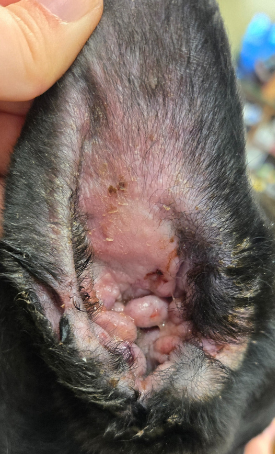
A dog ear with canal swelling and inflammation secondary to both yeast and bacterial infection.
Yeast thrives in warm, moist areas — exactly where ears and paws live.
Common affected areas:
Between toe pads and webbing
Ear canal
Skin folds
Clues that yeast/fungal infections may be involved:
“Corn chip” or musty odor
Greasy skin
Dark ear debris
Intensely itchy paws
Recurrent flare-ups
Many dogs need antifungal medications (topical or oral) once yeast overgrowth is confirmed, but the bigger long-term goal is preventing it from returning by addressing the underlying allergy/skin barrier problem.
3) Bacterial Infections (Also Commonly Secondary)
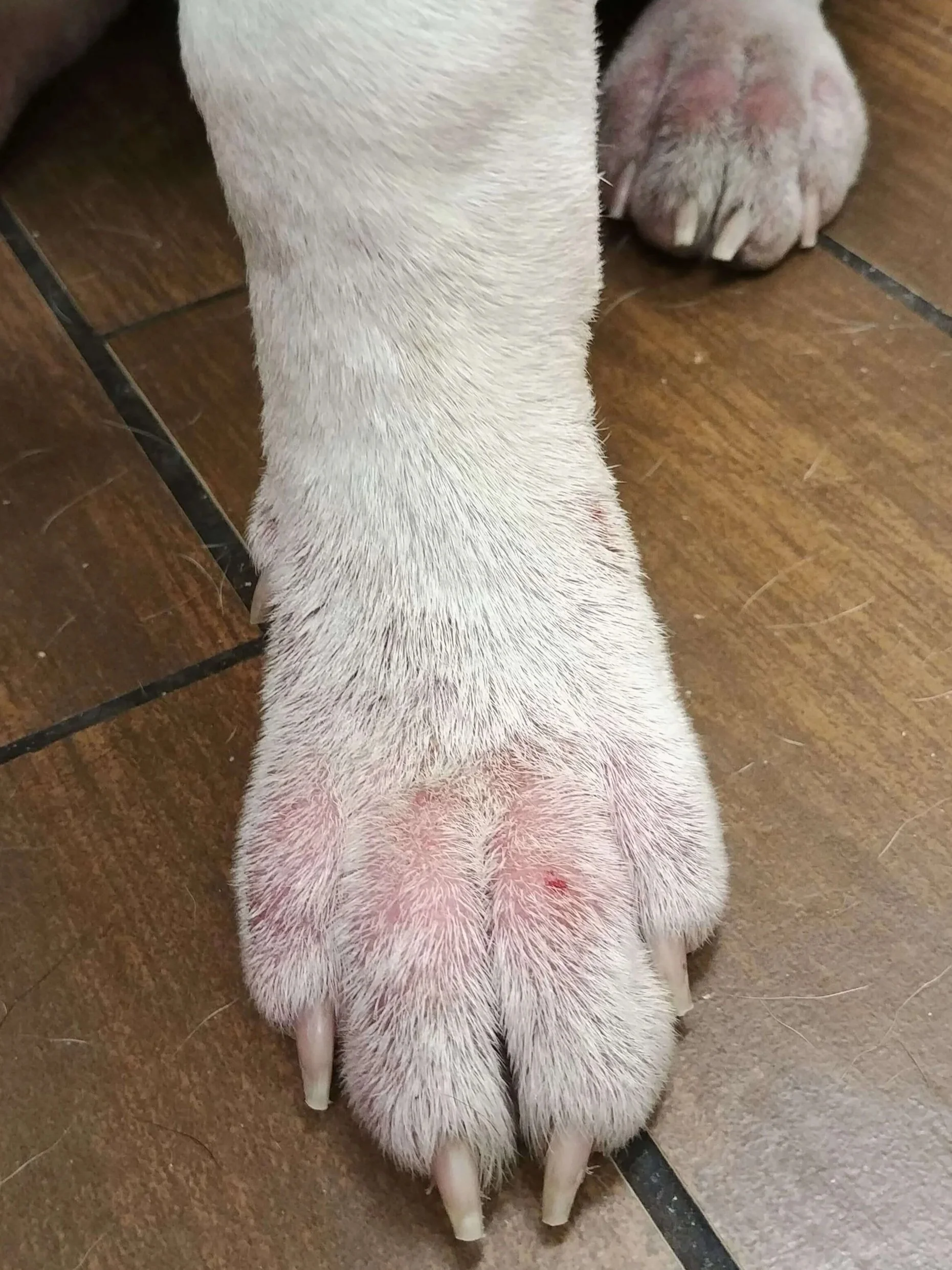
An inflamed dog paw with hair loss and bacterial infection from allergies causing him to lick excessively at his paws.
Bacterial infections frequently:
Accompany yeast infections
Develop after excessive scratching/licking
Cause redness, pain, odor, and discharge
Dogs with chronic ear infections often have an underlying allergy trigger that hasn’t been controlled. Treating bacteria helps, but if we don’t address the “why,” it comes right back.
4) Food Allergy or Food Intolerance (Less Common, Still Important)
Food-related reactions can cause systemic inflammation, not just GI signs.
Classic clues:
Year-round itching (not seasonal)
Recurrent ear infections
Paw licking that doesn’t change with weather/season
Symptoms in adult dogs and senior dogs that “came out of nowhere”
Some dogs also have GI signs such as occasional vomiting or diarrhea, but this isn’t all of them.
Important: There is no reliable blood, saliva, or hair test for food allergies in dogs.
✅ The only reliable way to diagnose food allergy/food intolerance is a properly done food trial (more below).
5) Contact Dermatitis / Environmental Irritants
Sometimes the trigger is direct contact — especially affecting paws first.
Examples:
Lawn chemicals and fertilizers
Cleaning products
De-icing salts
Certain grasses
These cases often look like:
Worse after walks
More paw-focused initially
Symptoms improve with rinsing/wiping and avoiding certain areas
6) Less Common Causes (But Worth Considering)
If symptoms are persistent, severe, unusual, or don’t respond to appropriate treatment, your vet may consider:
Foreign object in one paw or one ear (especially sudden, one-sided symptoms)
Ear mites (more common in puppies, but possible)
Hormonal imbalances (thyroid, adrenal disorders)
Immune system disorders
Chronic skin diseases/skin conditions
Compulsive behaviors (usually secondary to itch, stress, or discomfort)
Recognizing Symptoms: When to Seek Help
Occasional scratching and licking is normal. Persistent or escalating symptoms are not.
Red flags (vet visit recommended)
Scratching or licking lasting more than 48 hours
Head shaking with foul odor
Thick/dark ear discharge
Paw licking causing raw, bleeding, or swollen areas
Hair loss, hot spots, thickened skin
Pain when ears/paws are touched
Noticeable behavior changes (anxiety, irritability)
Early intervention prevents minor irritation from turning into:
severe damage to the skin barrier
chronic ear infections
recurring secondary infections that become harder to control
How to Identify the Underlying Cause Without Guessing
The goal isn’t to guess...it’s to recognize patterns over time.
As veterinarians, we look for trends and clues that help narrow the list of possibilities. These patterns guide our thinking, but they are not diagnostic on their own and they are not pathognomonic (meaning no single pattern proves a diagnosis by itself).
They simply help us decide what to investigate first. Preparing for a skin allergy appointment can make a big difference in how efficient and effective long-term treatment can be.
Common Pattern Clues We Watch For
Seasonal flares
Often point toward environmental allergens like pollen, grasses, or mold. This is especially true if symptoms worsen during the same months each year."Oh he always gets an ear infection this time of year."
Year-round symptoms
Raise suspicion for food allergy, food intolerance, or chronic allergic skin disease, particularly when symptoms don’t change with seasons.After-walk flare-ups
Common with contact dermatitis or environmental irritants/allergens, such as grass, lawn treatments, or de-icing products.One ear or one paw affected
Suggests a localized issue like a foreign object, focal infection, trauma, or structural problem, rather than a whole-body process.Both ears and multiple paws involved
More consistent with systemic inflammation, most commonly allergy-driven skin disease.
Why This Matters
These patterns don’t give us a final answer but they do help us:
Avoid random trial-and-error treatment
Choose appropriate diagnostic tests
Decide when infection vs allergy vs irritation is most likely
Build a treatment plan that actually makes sense
In other words: patterns guide the investigation, not the diagnosis.
Diagnosis still relies on physical exam findings, testing, response to treatment, and time.
That’s how we move from guessing to clarity and why tracking symptoms is so powerful in itchy dogs.
At-Home Physical Examination (Safe + Helpful)
You don’t need to be a vet to gather useful information, just be gentle.
Check the ears
Look for redness/swelling
Note discharge or odor
Healthy ears are usually pale pink and not gunky
⚠️ Avoid poking deep with Q-tips.
Check the paws
Separate toes and look between pads
Check nail beds and webbing
Look for redness, moisture, odor, or sores
✅ Take photos if you notice changes! Visual tracking is incredibly helpful.
Tracking Symptoms: The Diary That Changes Everything
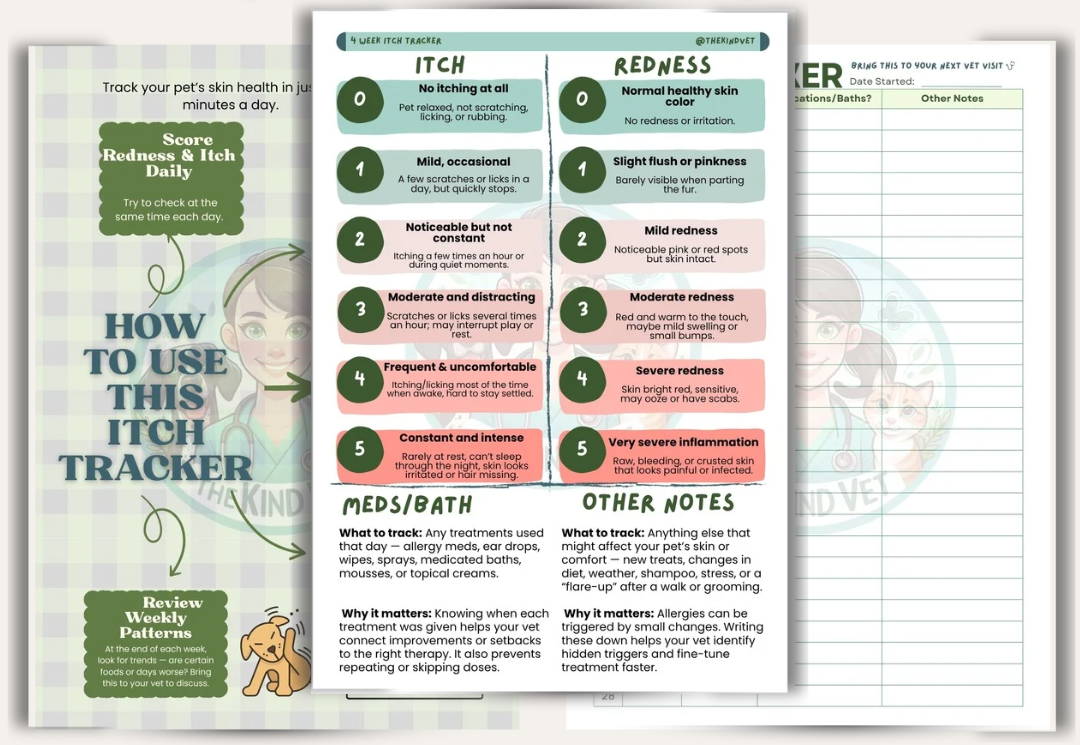
Preview of our Free Itch Tracker
This is one of the most powerful (and underused) tools in dermatology.
Track for at least 2–3 weeks:
Date/time symptoms occur
Which ears/paws are affected
Weather/season changes
Walk location/exposure
Diet + treats
Treatments used and response
This helps your vet decide the best way forward and prevents “random trial-and-error.”
Feeling overwhelmed by itchy skin & ears?
👉 Start tracking your dog’s patterns with the Free Dog Allergy & Itch Tracker
Allergy Testing for Dogs with Itchy Ears and Licking Paws
There’s a lot of misinformation online about allergy testing. Let’s make it simple.
When allergy testing is helpful
Year-round or severe symptoms
Poor response to standard treatment
Frequent relapse of infections despite appropriate care
Strong suspicion of environmental allergies
You’re considering long-term immunotherapy
It should never replace a good history + physical examination — it’s one tool in the bigger plan.
Types of Allergy Tests Veterinarians Use
Environmental allergy testing (for atopic dermatitis)
These tests identify environmental allergens, not food allergies.
Options include:
Blood tests
Measures immune response to environmental allergens
Simple blood draw
Often used in adult dogs and senior dogs
Intradermal skin testing
Tiny amounts of allergens injected under the skin
Evaluated for localized reactions
Often performed by veterinary dermatologists
Considered the gold-standard approach
👉 These tests help guide treatment and immunotherapy. They do not diagnose allergies “from scratch.”
Food allergy testing (what to avoid)
🚫 No reliable blood/saliva/hair tests exist for food allergies in dogs.
✅ Food trials are still the standard.
What Your Vet May Test For (Beyond Allergies)
If your dog is struggling, your vet may recommend:
Cytology (ear/skin) to check yeast and bacteria
Ear canal exam with an otoscope
Skin scrapings (mites)
Fungal testing when indicated
Blood tests if underlying health issues are suspected (especially in senior dogs)
Evaluating for a foreign object with sudden, one-sided symptoms
Imaging or referral in severe chronic cases
Rarely, dogs with severe chronic ear infections may require surgical intervention. This is not common, but worth knowing it exists. It is a salvage procedure for dogs to prevent pain and recurrent infections.
What Effective Treatment Actually Looks Like
There’s no one magic fix. The best plan is layered and individualized. This is best guided by your veterinarian.
1) Treat the infection (if present)
If cytology shows yeast/bacteria, you may need:
Topical antifungal medications
Antibiotics (topical or oral)
Anti-inflammatory support to stop the itch spiral
2) Control the itch safely
Depending on the case, your vet may recommend medications that target allergic reaction pathways and reduce inflammation.
3) Support the skin barrier
This matters more than most people realize. Barrier repair reduces flare-ups and infection risk.
4) Reduce triggers (environment + contact)
Wipe paws after walks
Reduce indoor allergens
Adjust tick preventative if reactions are suspected (with vet guidance)
Clean beds/blankets regularly
5) Consider long-term allergy control
Allergy testing + immunotherapy if appropriate
Ongoing management for allergic skin disease
Medicated Shampoos and Ear Cleaners
When basic care isn’t enough, medicated products can be a game-changer. Your vet can recommend the best ones for your pet.
Common options:
Antifungal shampoos (ketoconazole, chlorhexidine)
Antibacterial shampoos (benzoyl peroxide, chlorhexidine)
Enzymatic ear cleaners for debris control such as Zymox
⚠️ Avoid peroxide and harsh alcohol-based products on inflamed ears/skin unless directed by your veterinarian. Not all ear cleaning tips are safe…here’s why peroxide can be irritating.
Diet: Food Trials and Supplements
Food allergies are less common than environmental triggers, but they matter, especially with chronic ear infections.
Food trial basics
8–12 weeks
One diet only (no treats/chews/flavored meds)
Use novel protein diets or hydrolyzed protein diets
I recommend contacting your vet to find the best one for your pet.
Strict compliance = results you can trust
Helpful add-ons (with vet guidance)
Omega-3 fatty acids (EPA/DHA) for skin support
Probiotics for gut + immune support
Common Mistakes That Keep Dogs Itchy
Assuming it’s “just a habit”
Treating ears but ignoring paws (or vice versa)
Switching foods too quickly, not giving them enough time to work
Using home remedies that worsen irritation
Waiting too long and allowing secondary infections to establish
FAQ: Dog Itching Ears and Licking Paws
-
Because the same triggers (allergies, infections, irritants, skin barrier dysfunction) often affect both areas. It’s a common pattern in allergic skin disease.
-
You can’t reliably tell just by looking. Your vet can do cytology (looking at the cells under the microscope) to confirm yeast/bacteria. Allergies often set the stage; infections often follow.
-
You can gather helpful info (photos, diary, gentle inspection, paw wiping, skin support). But if symptoms persist >48 hours, worsen, or there’s odor/discharge, you need veterinary care to prevent severe or permanent damage.
-
Not always. It’s most helpful for chronic, recurring, or severe cases. This is especially true when environmental allergies are suspected and you’re considering immunotherapy. Immunotherapy is when we administer small “doses” of what your pet is allergic to over a long period of time. The hope is to “retrain” the immune system to stop overreacting to harmless triggers.
-
Not a reliable one. Food trials are still the only dependable method. These often use a hydrolyzed protein (protein broken down into small pieces that the body cannot recognize as an allergen) or novel protein (source of protein your pet has never eaten before). These have to be very strict and work best over 6-8 weeks with veterinary supervision.
-
If there’s severe swelling, bleeding, intense pain, head tilt, loss of balance, or your dog seems very unwell, do not hesitate to seek urgent veterinary care.
Key Takeaways
If your dog is itching ears and licking paws:
It’s usually a sign of systemic inflammation, not random behavior
Allergies are a top cause, infections are common secondary problems
Pattern tracking helps you find the real trigger faster
Early treatment prevents chronic ear infections and recurring flares
Your dog isn’t being difficult, they’re uncomfortable
A gentle note from a veterinarian 🤍
You don’t have to figure this out alone. With clarity, consistency, and the right plan, most dogs with ear and paw issues can live very comfortable lives.
Loved this article and want a structured way to track progress?
👉 Free ITCH TRACKER & Skin Reset tools in our Vet-Created Resources.

You’ve got this, and I’m here to help every step of the way. 🐾
💛 Dr. Fran, DVM, CPEV — veterinarian and founder of Kind Vet Wellness.
Learn more about Dr. Fran → Click Here
Medical Disclaimer:
The content on this website is intended for educational purposes only and does not replace professional veterinary medical advice, diagnosis, or treatment. Always consult your veterinarian regarding your pet’s individual health concerns.