A veterinarian’s guide to itchy paws, excessive paw licking, and what actually helps...without the guesswork.
If your dog won’t stop licking their paws — especially at night — you’re definitely not alone. Paw licking is one of the top reasons pet parents come to see me, and while a little paw grooming is normal, constant paw licking is almost always a sign of something more.
As a veterinarian who treats itchy dogs every single week, I can tell you this up front:
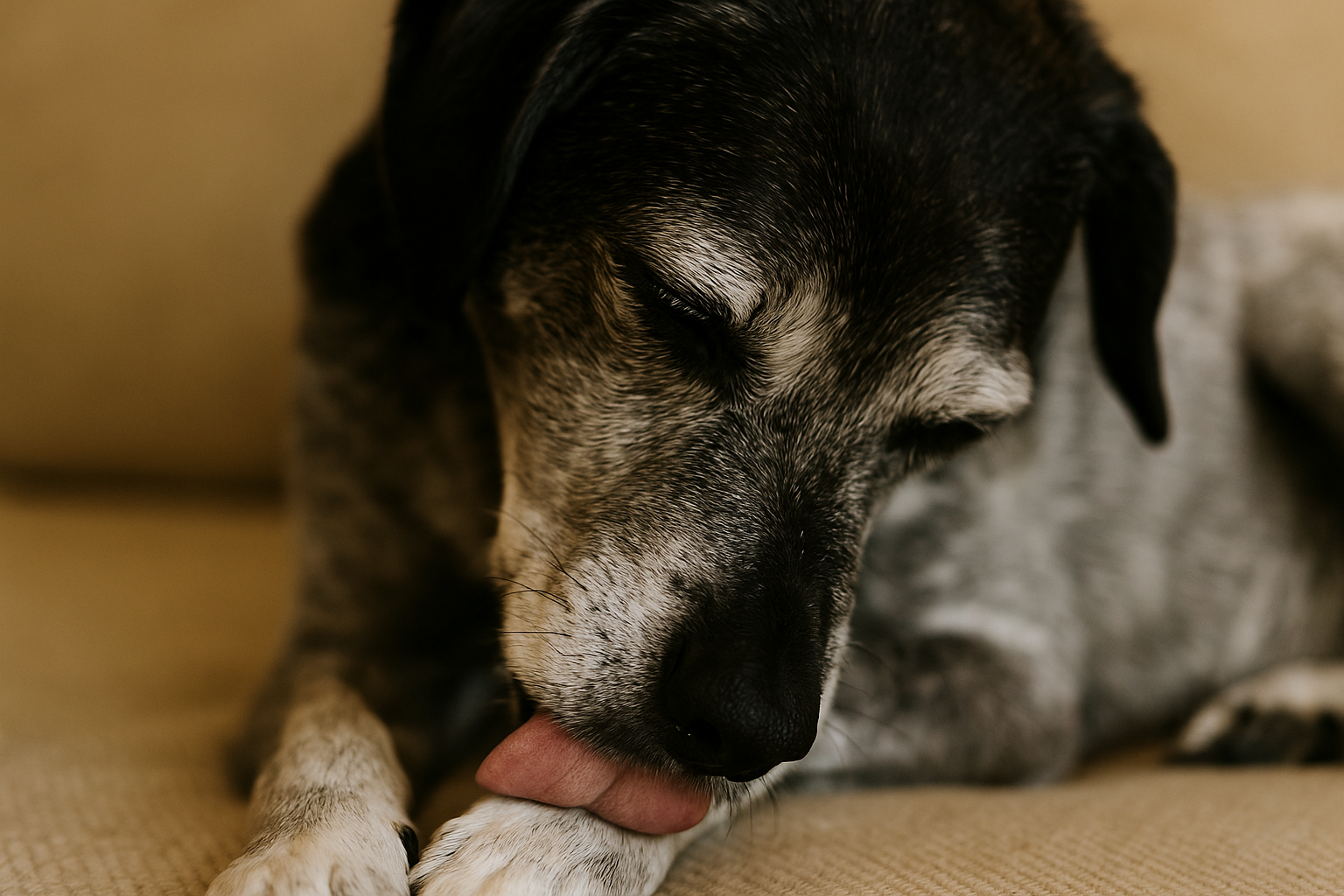
✨ Paw licking isn’t random. It’s a symptom. And the root cause is almost always treatable once you identify the pattern.
Let’s break this down simply and vet-approved.
The Real Reasons Dogs Lick Their Paws
Most pet parents only see the licking…but behind the scenes, there may be:
excessive licking due to allergies
itchy paws from seasonal or environmental triggers
a foreign object stuck between the toes
pain or arthritis in the affected area
anxiety-based compulsive behaviors
skin infections like yeast or bacteria
hot spots from moisture and over-licking
dry skin from weather changes or over-bathing
Understanding why your dog is licking their paws is the most important step to relieving the itch and it helps your vet pinpoint the underlying cause faster. Not just licking the paws, but itchy all-over? Check out our When to See the Vet for Itchy Skin (+ What You Can Do) post for more info!
Let’s walk through the most common causes.
🥇 Environmental Allergy (Atopic Dermatitis)
This is the #1 cause I diagnose in itchy dogs by far.
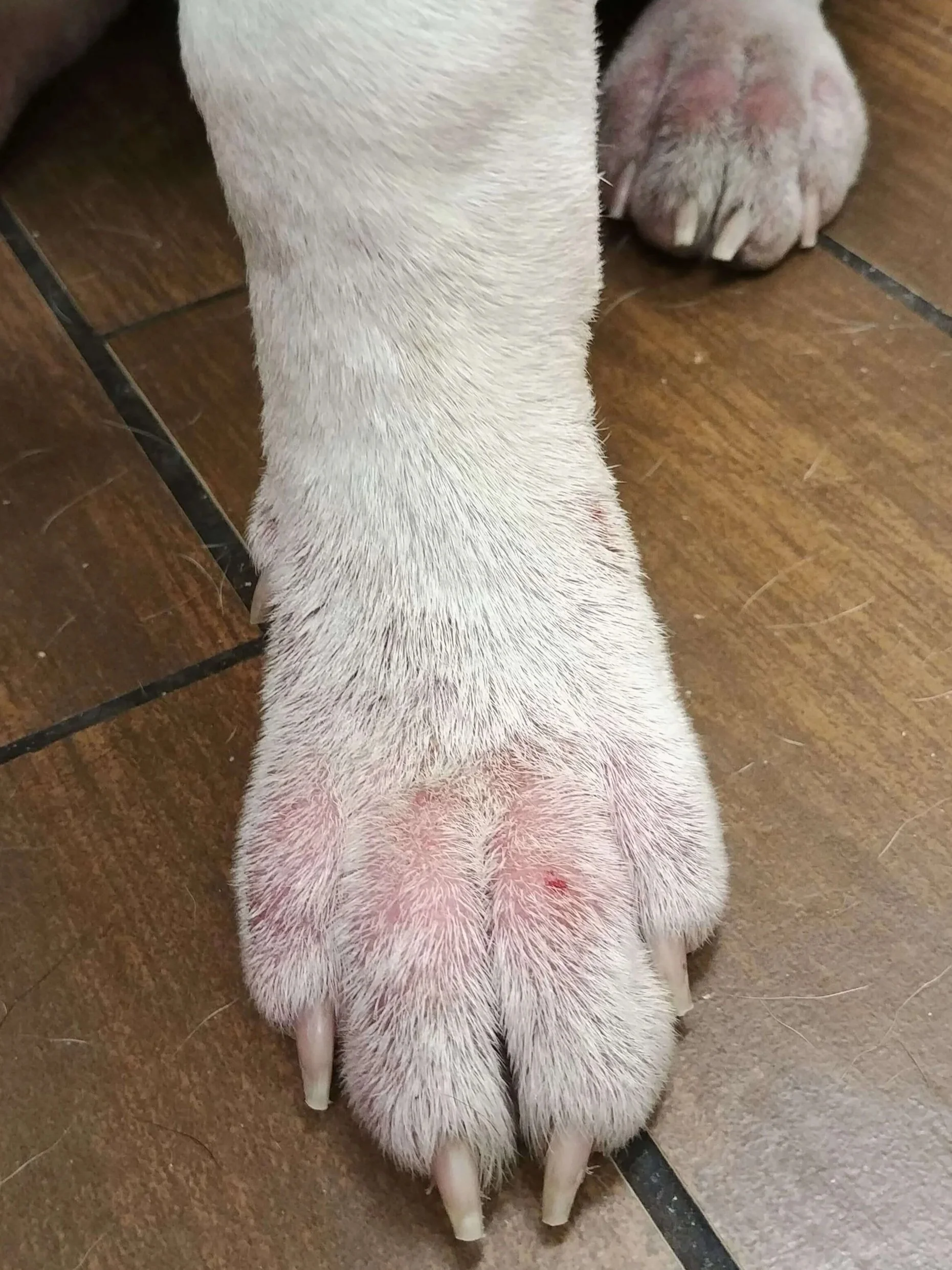
Just like people, dogs can react to pollen, mold, dust mites, or grasses. These allergens settle between the toes and on the paw pads and trigger itching and redness, especially seasonally.
Common Signs
Nighttime paw licking
Seasonal flare-ups
Red or inflamed paws
Recurrent ear infections
Licking after walks
Environmental allergies are one of the most common reasons for dog paw licking, and they frequently lead to excessive paw licking after going outside or before bed.
🍗 Food Allergy
Food allergies are another major cause behind excessive licking — and it’s almost always the protein, not the grain.
Dogs most commonly react to:
chicken
beef
dairy
fish
lamb
Common Signs
Paw licking (especially between toes)
Recurring ear infections
Chronic itching that doesn’t follow seasons
Food sensitivities causing vomiting or diarrhea
Many dogs with food allergies have yeast infections too, which makes the paw licking even worse.
🦠Yeast or Bacterial Infections
Yeast infections love warm, damp places (aka between your dog’s toes)
What starts as occasional paw licking quickly becomes compulsive licking because yeast makes the skin itchy, greasy, and uncomfortable.
What You May Notice
Brown staining between toes
A “corn chip” smell
Moist, irritated skin
Hair loss near the paws
These infections often start with mild itchy paws and then escalate into constant licking as the area becomes painful.
🩹 Pain, Arthritis, or Injury
Not all paw licking is allergy-based.
Dogs often lick one specific paw when there’s:
a joint issue
a strained toe
joint pain from arthritis
a tiny cut or scrape
If your dog fixates on a single area, especially if the skin looks normal, pain may be the underlying cause.
😰 Anxiety or Compulsive Licking
Some dogs lick their paws to self-soothe during separation anxiety, similar to nail-biting in humans.
This can happen when:
schedules change
guests visit
a pet parent leaves
there’s ongoing stress
Compulsive licking often leads to hot spots, lick granulomas, or secondary infections.
⚠️ When Paw Licking Means It’s Time for A Vet Visit
An occasional lick isn’t concerning but these signs are red flags:
constant licking, chewing, or rubbing disrupting normal behaviors (sleeping, eating, etc)
red, greasy, or foul-smelling skin
hair loss, scabs, or open sores
head shaking, head tilt, or frequent ear scratching
sudden increase in nighttime licking
thickened or darkened skin
limping or licking one paw only
These symptoms mean your dog’s paws need a closer look. Your vet can check for infections, mites, allergies, or something deeper.
Your dog deserves to feel comfortable — not stuck in an endless itch → flare-up → temporary relief → itch cycle.
🌿 What Actually Helps (Vet-Approved Home Tips)
Here’s what you can safely do at home while you’re monitoring symptoms or waiting for your appointment.
🛁 1. Vet-Approved Medicated Baths
Shampoos containing:
Chlorhexidine (2–4%) : Anti-microbial
Miconazole (2%) or ketoconazole: Anti-fungal (yeast)
Phytosphingosine: Supports the skin barrier
Ophytrium: Helps repair irritated skin (frequently in veterinary-exclusive lines)
…can help break the itch cycle.
💡 Vet Tip: Let the shampoo lather sit for a full 10 minutes before rinsing.
Rinse thoroughly because leftover moisture trapped between the toes can worsen yeast.
🐟 2. Omega-3 Supplements
EPA + DHA from high-quality fish oil helps:
reduce inflammation
support the skin barrier
decrease frequency of flare-ups
This is one of the simplest ways to help itchy dogs from the inside out.
🧽 3. Regular Grooming + Paw Care
Wipe paws after walks to remove allergens that have gotten on their feet
Brush out pollen, debris, and allergens
Keep paw fur trimmed to prevent matting/irritation
Wash bedding weekly
Small changes here can significantly reduce irritation.
📋 4. The Most Overlooked Step: Track the Symptoms
This is a game-changer and should probably be the first step!
Write down when your dog licks their paws most:
after meals?
after walks?
at night?
only in certain months?
after baths?
after visitors or stress?
✨ Patterns reveal triggers before anything else does.
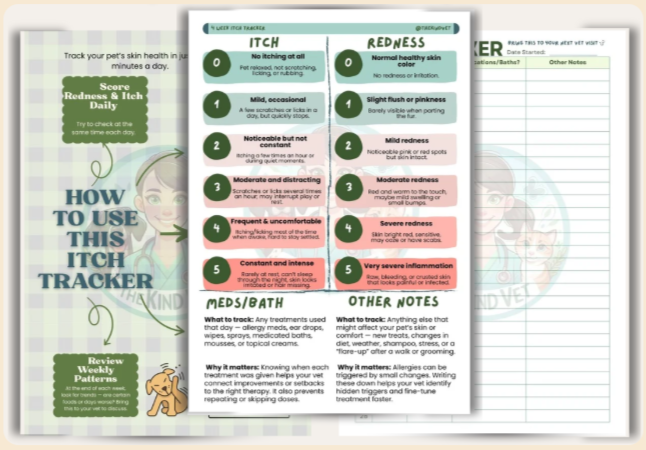
To make this easier, I designed a free Vet-Created Itch Tracker that helps you log flare-ups, triggers, treatments, and progress — and you can share it directly with your vet so we can help you more effectively.
🧡 Final Thoughts from Dr. Fran
Paw licking can feel never-ending for dogs and the people who love them. But here’s the good news: once you understand the pattern behind the itching, most causes are incredibly treatable.
You don’t have to guess anymore.
And you don’t have to wait for things to “get worse” before you act.
🌿 Support the Skin While You Look for Patterns
If your dog is in an active flare or you want to help calm the skin while tracking, my 28-Day Skin & Itch Reset gives you vet-approved steps you can start at home right away.
It’s gentle, simple, and designed to help:
reduce flare-ups,
support the skin barrier, and
break the itch-lick cycle sooner.
🌟 One Last Note
You’re doing an amazing job just by being here and learning. Paw licking isn’t “normal,” and your dog deserves relief but they don’t have to wait months for it.

You’ve got this, and I’m here to help every step of the way. 🐾💛
💛 Dr. Fran, DVM, CPEV — veterinarian and founder of Kind Vet Wellness.
Learn more about Dr. Fran → Click Here
Medical Disclaimer:
The information on this website is for educational purposes only and is not veterinary medical advice. Always consult your veterinarian for questions about your pet’s individual health needs.