Why Is My Dog Scratching & Shaking Their Ears? (A Vet Explains)
If your dog won’t stop scratching their ears, rubbing on the carpet, shaking their head, licking their paws, or whining when you touch the ear...you are not alone. As a veterinarian who sees itchy dog ears every week, I can tell you that ear scratching is one of the most common reasons pet parents come in for answers.
And here’s what most people don’t realize:
👉 Ear scratching isn’t the problem. It’s a symptom.
👉 Most ear issues are treatable once you understand the pattern.
👉 And almost all chronic cases come back to one root cause: allergies.
Let’s walk through what’s really happening inside your dog’s ears, how allergies create chronic cycles, when you need a vet visit, and what actually helps at home.
The Real Reasons Dogs Scratch Their Ears
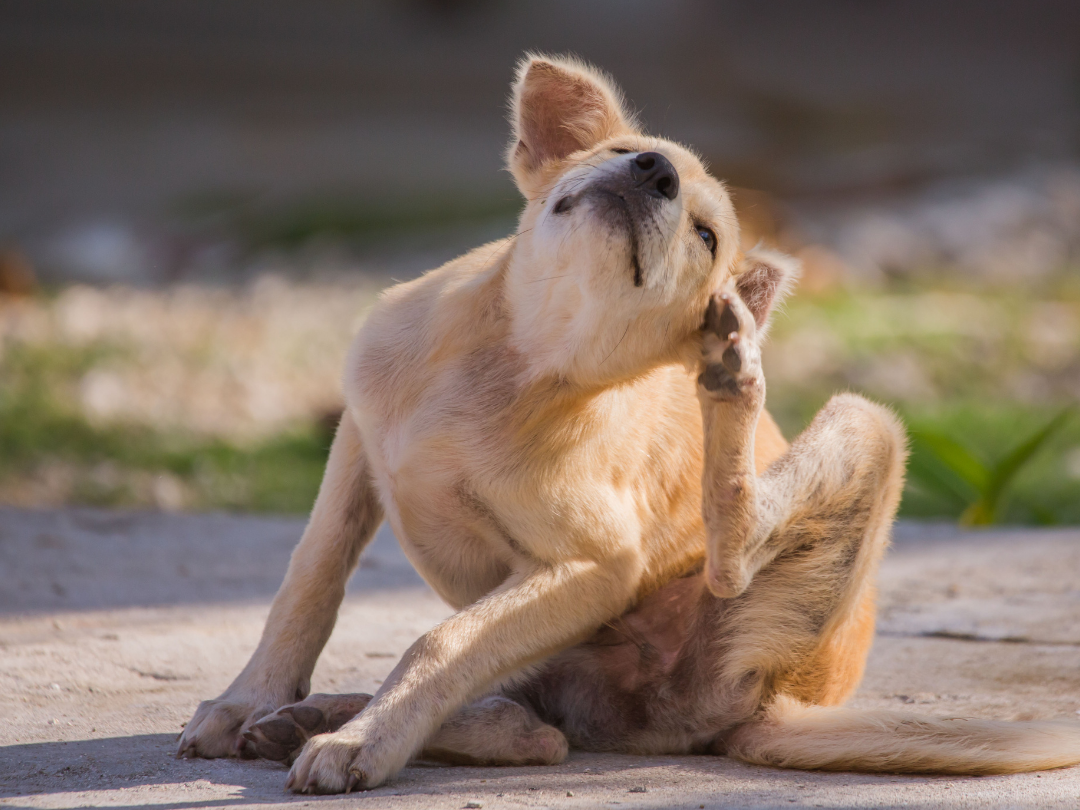
Most pet parents only see the scratching, but behind the scenes, several different issues might be at play. Ear scratching can be caused by:
Environmental or Food Allergies (the #1 cause)
Ear mites in puppies or outdoor dogs
Yeast Bacterial ear infections (yeast or bacteria)
Excessive moisture inside the ear canal
Foreign bodies like grass seeds
Compulsive behaviors due to anxiety
Pain or pressure from deeper ear inflammation
Dry skin
Underlying medical conditions
But here’s the truth:
👉 In 70–80% of chronic dog ear infections cases I diagnose, allergies are the root cause.
And once allergies inflame the ear canal, everything else...yeast, bacteria, odor, redness, shaking, scratching... follows.
Not just the ears, but dealing with all over itch? Check out my other post: When to See the Vet for Your Dog’s Itchy Skin (+ What You Can Do)
1. Environmental Allergies (Atopic Dermatitis)
This is the #1 cause of itchy dog ears I diagnose.
Just like people react to pollen, dust mites, and mold…dogs absolutely do, too.
Allergens settle deep inside the ear canal, irritate the skin, and cause inflammation that traps heat and moisture. And where there’s warmth + moisture?
👉 Yeast thrives.
👉 Scratching increases.
👉 Secondary infections form quickly.
Common Signs of Atopy:
Itchy dog ears and itchy skin at night
Seasonal flares
Recurrent head shaking
Ear redness
Odor or brown debris inside the ear
Moist areas deep in the canal
Paw licking at the same time of year
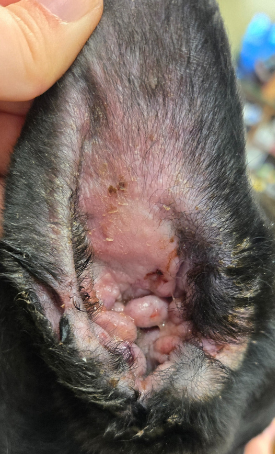
If your dog has a foul odor, greasy debris, or crusty buildup… this is your section.
2. Yeast & Bacterial Ear Infections
Most ear infections are secondary — meaning something else (usually allergies) triggered the inflammation first.
Inside the ear canal, inflammation leads to:
trapped moisture
overgrown yeast
increased bacteria
thickened skin over time
strong odor
pain
head shaking
scratching until the skin bleeds
Warning signs:
Brown, waxy buildup
Strong musty smell
Sensitivity when touched
Shaking the head frequently
Skin thickening around the ear opening
Untreated infections can rupture blood vessels in the ear flap, causing a hematoma (a painful swelling requiring surgery).
3. Food Allergies (A Common But Overlooked Cause of Itchy Ears)
Food allergies don’t always show up the way pet parents expect. While many people imagine vomiting or diarrhea, the truth is this:
👉 In dogs, food allergies most often show up as skin and ear problems.
In fact, chronic itchy ears (especially itchy ears plus paw licking!) is one of the most common patterns I see in dogs with food sensitivities.
Why Food Allergies Affect the Ears
Food allergies cause inflammation from the inside out. When the immune system reacts to a food protein, the skin inside the dog’s ear canal becomes red, itchy, and more vulnerable to yeast and bacteria. That’s why many dogs get ear infections that keep coming back despite multiple rounds of treatment.
Most Common Food Triggers
Research consistently shows that proteins, not grains, are the biggest culprits:
Chicken
Beef
Dairy
Egg
Fish (less common, but possible)
Switching to grain-free doesn’t necessarily solve the problem because grain isn’t usually the problem. The protein is.
Clues Your Dog’s Ear Itching May Be Food-Related
Look for these patterns:
Itching occurs year-round (not seasonal)
Both ears flare at the same time
Itchy ears + paw licking
Itchy ears + butt scooting or soft stool
Repeated ear infections despite good ear care
Occasional gastrointestinal flare-ups with vomiting or diarrhea
If your dog improves on a new food for a few weeks, then suddenly “backslides,” this is also a classic sign because partial, unintentional exposure to the trigger protein restarts the inflammation cycle.
How Vets Diagnose Food Allergies
There is only one gold-standard test:
👉 A strict elimination diet using a novel-protein or hydrolyzed prescription food for 8–12 weeks.
Over-the-counter “limited ingredient” diets often contain trace proteins not listed on the label, which is why they’re not reliable for true diagnosis.
Why Tracking Helps
Food allergy flare-ups tend to follow a time pattern but most pet parents don’t realize it until we map it out together.
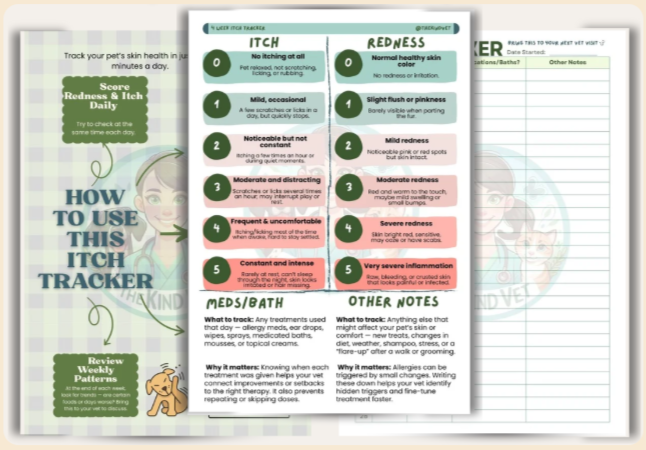
With my vet-created itch tracker, it can help reveal:
Whether flares happen after certain foods or treats
If itching is truly non-seasonal
Whether infections return on the same timeline
Subtle early signs (mild redness, ear shaking) before a full infection sets in
3. Ear Mites (More Common in Puppies & Outdoor Cats)
While ear mites are far less common than the internet leads people to believe, they do still show up...especially in puppies or dogs that share space with outdoor cats.
Signs of ear mites:
Dry, crumbly black discharge
Intense scratching
Head tilting
Rapid onset in multiple pets
4. Breed Predisposition: Why Some Dogs Get More Ear Problems Than Others
Some dogs are simply built to struggle with chronic ear infections...even when their pet parents are doing everything right. Certain breeds have unique ear shapes and skin characteristics that trap heat and moisture inside the dog’s ear canal, creating a perfect environment for yeast or bacteria to grow.
Here are the breeds I most often see for chronic ear issues:
🐾 Cocker Spaniels
Cocker Spaniels have heavy, floppy ears and naturally oily skin. That combination traps humidity and makes yeast infections more likely to become chronic. Even a mild flare can escalate quickly, which is why early monitoring is a good idea with this breed.
🐾 Basset Hounds

Their long ear flaps act like a built-in “moisture blanket,” preventing proper airflow. Basset Hounds are extremely prone to chronic ear infections, especially if environmental allergies are involved. Their deep ear canals can hide inflammation until the infection is advanced.
🐾 French Bulldogs
Frenchies don’t have floppy ears, but they do have narrow, twisty ear canals and a high rate of environmental and food allergies. That means even mild inflammation can quickly become a yeast infection or secondary bacterial infection.
Why This Matters
Breed predispositions don’t mean you’re doing anything wrong. They simply mean your dog’s anatomy puts them at higher risk for needing medical attention and professional help. Understanding your dog’s structure helps you and your vet stay ahead of flare-ups, monitor symptoms early, and protect the ear canal before infections become painful or chronic.
How Allergies Cause “Chronic Ear Dogs”
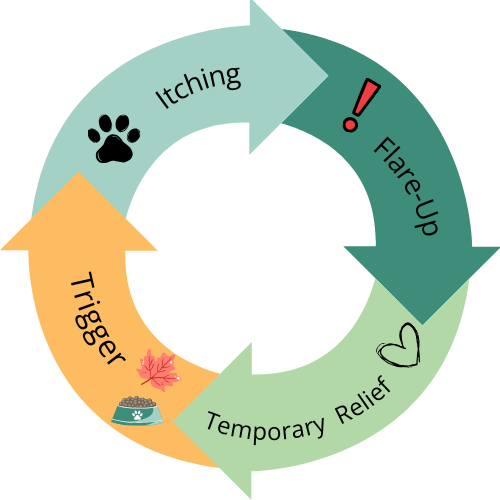
If your dog’s itchy ears keep coming back, here’s what I want you to know as a vet:
Typical cycle I see in allergic dogs:
Environmental allergen trigger
Skin becomes inflamed and traps heat + moisture
Yeast grows
Scratching increases
Bacteria join in and a painful infection starts
Medicine works temporarily
Allergies flare again…
The cycle repeats
The real problem isn’t the bacterial infections...it's the allergy trigger.
This is where tracking matters.
When pet parents track flare-ups, patterns appear:
🌼 Seasonality (spring = pollen)
🍂 Fall mold spores
🏠 Indoor triggers (dust mites, perfumes, scented laundry)
🥘 Food reactions
🚿 Bathing patterns (moisture left inside ear canals)
🧽 Environmental changes
🐶 Ear redness before odor appears
🌧️ Humidity cycles
Tracking helps your vet identify the root cause, eliminate guesswork, and create a personalized treatment plan that actually works.
When It's Time For A Veterinary Visit
constant scratching for more than 48 hours
head shaking
sudden foul odor
any kind of discharge (bloody, dark, yellow)
redness or swelling or ear hematomas (swollen ear flap)
pain when touching the ear
thickened skin
bloody discharge or open wounds
head tilt
These require professional and appropriate treatment. Early care prevents complications.
🧡 Final Thoughts from Dr. Fran
Ear scratching frustrates both dogs and the people who love them.
But some ear problems are highly treatable once you understand the pattern behind the itch.
You don’t have to guess.
You don’t have to wait for another flare-up.
You don’t have to feel like you’re always one week away from another infection.
If you want a clear starting point:
👉 Grab your free Vet-Designed Itch Tracker to uncover your dog’s allergy triggers.
👉 Try the 28-Day Skin Reset if you want a structured plan to calm flare-ups.
I’m cheering for you and your dog’s ears.
You’ve got this. 🧡
Medical Disclaimer:
The information on this website is for educational purposes only and is not veterinary medical advice. Always consult your veterinarian for questions about your pet’s individual health needs.